COEA Statutes Reform: integrating audit professionals and reshaping the structure of economic professions
The COEA updates its statutes to include audit professionals, broaden its professional scope and modernise internal governance and decision-making rules.
 Elysium Consulting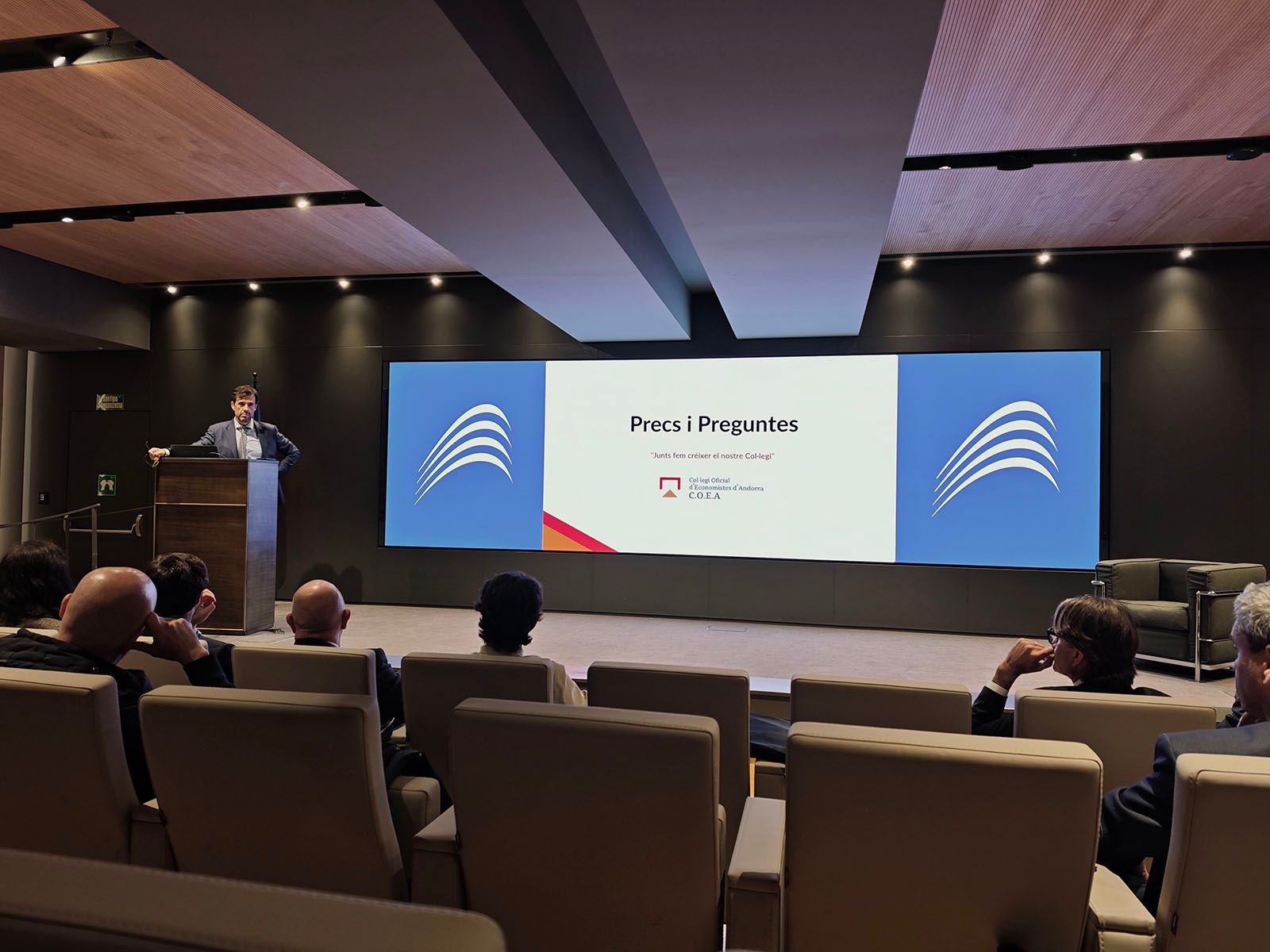
Reading time: 4–6 minutes
🧾 Amending the COEA Bylaws: a necessary update to integrate audit and organise all economic professions
The Official College of Economists of Andorra (COEA) has begun the process of amending its Bylaws with a clear purpose: aligning the institution with Law 10/2024, of 27 May, on audit of accounts, and updating the voting regimes and internal regulations to reflect a much broader and more diverse professional landscape than originally foreseen.
This statutory reform was presented at the Extraordinary General Assembly held on 26 June 2025, convened specifically to address this single point. Although it could not be approved due to lack of quorum, the proposal —later published in the BOPA— clearly shows the direction in which the profession is evolving within the country.
If you want to explore the Law behind this amendment, you can read Audit of accounts in Andorra: what it regulates and how it reshapes the professional framework.
🔹 A professional college that goes beyond the economist title
The updated Bylaws acknowledge that the COEA now brings together highly diverse profiles: economists, accountants, tax advisers, financial experts and, following the Audit Law, statutory auditors.
The purpose of the College is therefore to organise and encompass this full range of professions, ensuring shared ethical, training and quality standards.
The reform formalises this broader mission by expanding the College’s objectives and creating dedicated branches for regulated professions, such as the new audit branch set out in articles 21 bis and following.
🔹 Integration of auditors into COEA: mandatory membership without requiring an economist degree
Law 10/2024 establishes that all auditors registered in the Andorran Register of Auditors must be members of COEA. The Bylaws implement this through:
- the creation of an audit branch with its own training, ethics and representation framework;
- the possibility of joining as an auditor without holding an economist degree, provided all legal professional requirements are met (art. 8 ter);
- the mandatory inclusion of all auditors, whether resident or non-resident, authorised by the AFA.
This marks a structural shift: COEA becomes a bodie representing the entire economic sector, with differentiated branches under a single institutional umbrella.
If you want to understand more about professional colleges, see Professional bodies in Andorra: what they are and why they matter.
🔹 Reform of voting regimes and internal governance
Although audit integration is the centrepiece of the reform, the proposal also updates:
- statutory voting regimes,
- decision-making procedures,
- and the functioning of governing bodies.
These changes reflect the need for a more flexible governance model suited to a college representing varied professional profiles, as highlighted in recent assemblies and in the monitoring of the 2024–2025 strategic plan.
They also leave room for future adjustments in the medium term.
🔹 A transformation process aligned with new professional regulation
The amendment of the Bylaws is part of a broader transformation in which COEA has:
- participated in drafting the Audit Regulation and the Register of Auditors (RACA);
- engaged with public institutions in the context of the future regulation of the economist profession;
- provided training and technical support to members, including specific sessions on the new audit framework (May 2025).
Collectively, these initiatives show that the Bylaws are adapting not only to a law but to a structural evolution of the professional model.
Conclusion
The reform modernises COEA and turns it into an institution integrating all professions within the economic field, including audit as a regulated and specialised branch.
It enables mandatory membership for auditors without requiring an economist degree and updates internal governance mechanisms to reflect a more diverse, European-aligned professional reality.
It is a natural and necessary evolution to continue ensuring the quality, independence and prestige of all professions represented within the College.
At ELYSIUM, we firmly believe in technical rigour and knowledge as the foundation for sound decisions, which is why we participate actively in institutions such as COEA and specialised commissions.
Last updated: December 2025