
The Monetary Agreement between Andorra and the European Union: origin, meaning and impact on Andorra’s financial system
The 2011 Monetary Agreement explains why Andorra uses the euro, can issue its own coins and has aligned its financial system with European regulatory standards.
 Elysium Consulting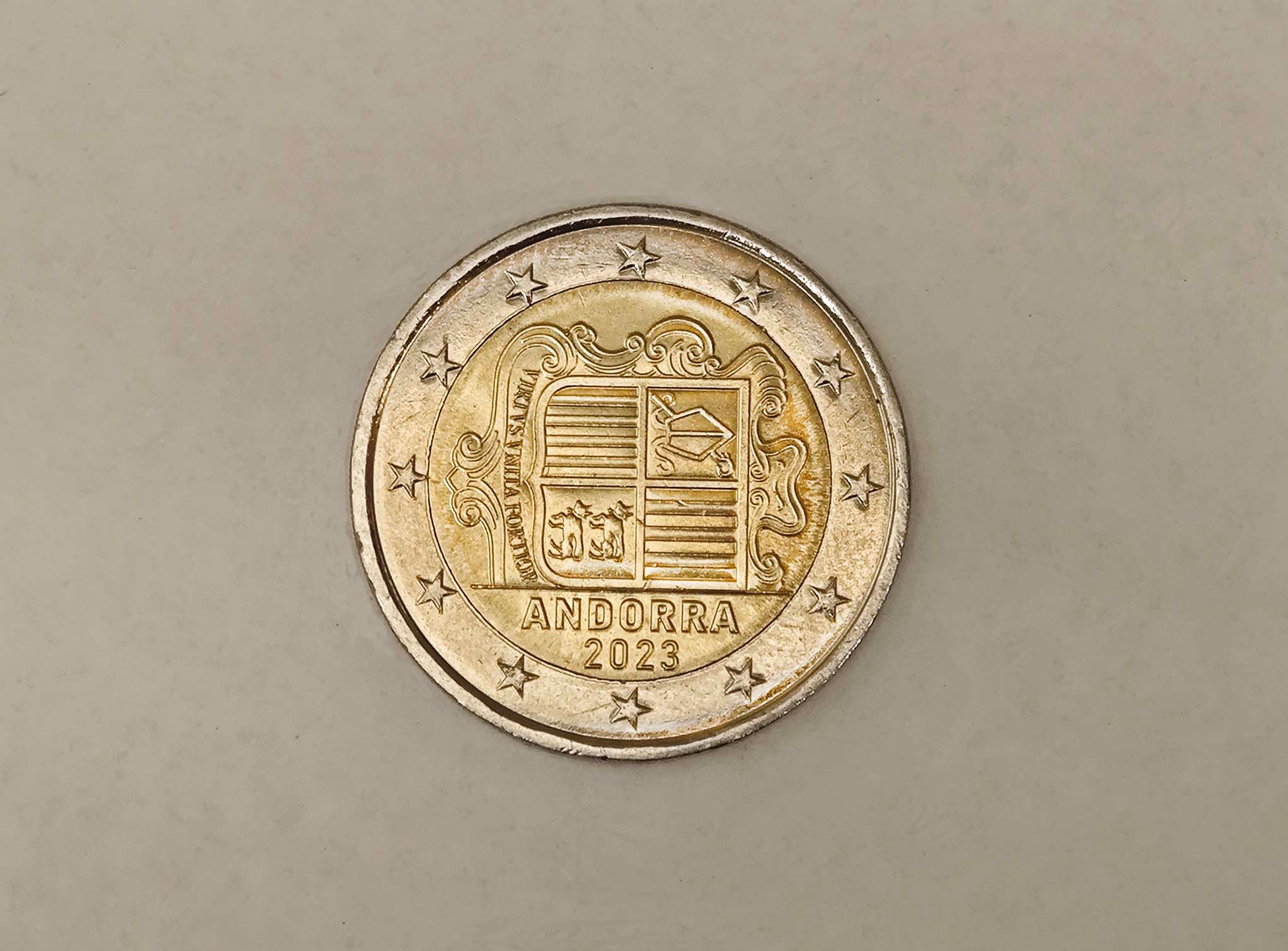
Reading time: 10 minutes
Understanding the 2011 Monetary Agreement
The Monetary Agreement is one of the most significant international legal instruments for understanding Andorra’s position within Europe. It is not a general economic agreement nor a political-integration mechanism: it is, above all, a technical agreement that provides legal backing to a reality the country had already lived for decades.
The 2011 Agreement formalises an existing situation —the use of foreign currencies— and simultaneously establishes broad financial, supervisory and regulatory obligations that have shaped Andorra’s banking system.
For this reason, it is essential to understand:
- why Andorra uses the euro;
- why it can issue its own coins;
- and why its financial framework has gradually aligned with European standards.
➤ To explore the country’s evolution and its opening process, we recommend the article International evolution of Andorra.
The previous situation: a country without an official currency
For much of its modern economic history, Andorra operated without a national currency. The Spanish peseta and the French franc circulated simultaneously as de facto means of payment, a flexible and functional model for a small economy closely tied to its neighbours.
On 1 January 2002, the euro replaced both currencies in the neighbouring states. Without a formal agreement, Andorra adopted the euro as its circulating currency. This use was legitimate —other European territories also used the euro unilaterally— but legally incomplete:
- it could not issue its own currency,
- it lacked access to European payment systems,
- and it did not benefit from a regulatory framework equivalent to EU financial standards.
To address this, the country launched a diplomatic process in 2003, culminating in the signing of the Monetary Agreement on 30 June 2011 in Brussels.
Essential content of the Monetary Agreement
The Monetary Agreement contains 14 articles and a substantial annex listing the European legislative acts Andorra is required to adopt. Its core elements are the following.
🔹The euro as official currency and the right to issue coins
Article 1 establishes that the euro is Andorra’s official currency, and the country must grant legal tender status to euro banknotes and coins issued by euro-area Member States.
Article 2 recognises Andorra’s right to issue its own euro coins, bearing an Andorran national side and with legal tender across the euro area.
This capability did not exist before 2011 and places Andorra on the same footing as other European microstates with similar monetary agreements.
Issuance is subject to:
- the adoption of relevant EU legislation,
- the signature of the IOSCO cooperation agreement,
- compliance with annual limits set by the Joint Committee.
🔹Application of European financial regulation
Article 8 is particularly significant, as it obliges Andorra to progressively adopt EU standards in areas such as:
- banking supervision,
- anti-money-laundering rules,
- protection against counterfeiting,
- payment services (including PSD and PSD2),
- electronic money,
- rules on banknotes and coins,
- financial data reporting.
This process has been a central driver in modernising Andorra’s regulatory framework.
➤ To understand how the country’s banking system works, you may find the article Andorra’s banking system: structure, institutions and supervision helpful.
🔹Access to European payment systems
Thanks to the Agreement, Andorran credit institutions can access euro-area clearing and settlement systems, provided they meet the requirements set by Spain, France and the Eurosystem. This enabled Andorra’s integration into SEPA, a decisive step for the country’s economy.
🔹Governance: the Joint Committee
The Agreement establishes a Joint Committee composed of:
- the European Commission,
- Spain,
- France,
- the European Central Bank,
- and the Government of Andorra.
This body reviews compliance annually and validates the limits on coin issuance.
⛔ What the Monetary Agreement does not do
It is essential to identify what the Agreement does NOT entail, as confusion is common:
- ❌ It does not grant access to the EU single market for financial services.
- ❌ It does not allow Andorran banks to freely provide services within the EU.
- ❌ It does not make Andorra a member of the euro area.
- ❌ It does not bind the country to EU monetary policy.
- ❌ It is not a broad economic agreement, but strictly a monetary and financial one.
These limitations are reinforced by the Memorandum of Understanding, which classifies Andorra as a “third country” for banking-regulatory purposes.
Real impact on Andorra’s financial system
Although technical in nature, the Agreement has had a profound impact.
🔹Alignment with European standards
The Agreement has pushed Andorra to modernise its legislation and reinforce:
- supervisory mechanisms,
- transparency,
- banking controls,
- and the adoption of EU anti-money-laundering standards.
It also opened the way to SEPA and contributed to the financial sector’s international recognition.
➤ To understand the impact of SEPA —a direct consequence of the Agreement— you may find the article SEPA in Andorra: operation and advantages useful.
🔹Credibility and stability
Using the euro under a formal agreement provides legal certainty to investors and international institutions. The issuance of Andorran euro coins reinforces this integration symbolically.
🔹Permanent cooperation with the EU
The Joint Committee ensures a stable mechanism for review, coordination and adaptation, making it easier to incorporate new EU directives.
🔹A key element in the country’s modernisation
The 2011 Monetary Agreement has played a decisive role in Andorra’s institutional evolution:
- it consolidates the euro as the sole official currency;
- it enables the issuance of national coins;
- it opens the door to progressive regulatory integration;
- it strengthens the stability and reputation of the financial system;
- and it prepares the country for broader integration processes such as the Association Agreement.
➤ To understand what the Association Agreement involves, you may consult the article The Association Agreement between Andorra and the European Union.
Conclusion
The Monetary Agreement does more than formalise the use of the euro: it is a cornerstone of Andorra’s financial modernisation. It has enabled the country to operate with a stable currency, adopt a regulatory framework aligned with European standards and present itself as a reliable jurisdiction ready to compete in a demanding global environment. Andorran euro coins, beyond their numismatic value, symbolise this deep process of institutional consolidation.
If you would like to understand how the Monetary Agreement or other EU-integration mechanisms may affect your personal or business project, you can request your personalised meeting just below, or complete the contact form.
Last reviewed: November 2025.

Technical Author: Albert Contel